
How to Restart Your Career After a Career Break: A Practical Roadmap
Learn how to rebuild professional direction, refresh your skills, strengthen your digital presence and create momentum after a career break.
A career break can make returning to work feel much harder than it actually is.
You may look at your resume and see a gap. You may look at your skills and wonder whether they are still relevant. You may compare yourself with people who never stopped working and feel that you are already behind.
And sometimes, the biggest obstacle isn’t the career break itself.
Restarting your career is about understanding what you bring with you, identifying what has changed, rebuilding what needs updating and creating a realistic path back into professional life.
A career break can happen for many reasons—family responsibilities, relocation, raising children, recovery, study, or simply reassessing your priorities. The important question now is not “Why did I stop working?” but “What do I want to build from here?”
The 7-Step Career Restart Roadmap
Before applying for jobs, take an honest snapshot of your current professional position.
- What was my previous professional experience?
- What skills do I still use confidently?
- Which skills have become outdated?
- What has changed in my industry?
- What kind of work interests me now?
- How much time can I realistically commit?
- Do I want employment, freelancing, consulting, entrepreneurship or remote work?
- What are my financial priorities?
A career restart can also be a career redesign.
Don’t define yourself only by your previous designation. Look underneath the job title and identify the skills you actually developed.
For example, an accountant may bring financial reporting, analysis, Excel, compliance, communication, client management and problem-solving skills.
Your professional identity is usually bigger than your old job title.
Divide your skills into three categories:
- Skills I Still Have — capabilities you can demonstrate today.
- Skills I Need to Refresh — areas where tools, regulations or practices may have changed.
- Skills I Need to Build — newer capabilities that can make you more competitive.
Potential areas include AI tools, digital communication, data analysis, productivity tools, LinkedIn, remote collaboration and automation. Choose only the skills that connect to the work you want next.
“I’m looking for a job” is a starting point, not a strategy.
Try to define a direction such as returning to finance through a remote role, moving into finance operations and AI-enabled workflows, or applying previous HR experience in a digital workplace.
You do not need to choose your entire future today. You only need to choose your next direction.
Your resume is not the only thing employers may see. Update your LinkedIn headline, About section, experience, skills, certifications, projects and featured work.
Don’t hide your career break. Present your professional story clearly and confidently.
Your profile should answer: Who are you? What can you do? What opportunity are you looking for now?
If you don’t have recent experience, create recent evidence.
- Build a project.
- Create a portfolio.
- Complete a practical course.
- Write an industry article.
- Analyse a dataset.
- Create an Excel model.
- Build an AI-assisted workflow.
- Help a small business or take a project assignment.
Move from “I am ready to work” to “Here is what I can do.”
Your first opportunity after a career break may not be your final destination. Consider part-time work, remote roles, contracts, freelance projects, consulting, internships, project assignments or smaller organisations.
The objective is to rebuild professional momentum.
What About the Career Gap on Your Resume?
This is one of the most common concerns professionals have after a career break.
Don’t make the gap the most interesting thing about your resume.
Focus on what you accomplished before the break, what skills you developed, what you have refreshed, what you are doing now and what value you can bring.
Career Break — Family Responsibilities
Took a planned career break to focus on family responsibilities while maintaining professional development through learning and skill-building.
Keep it factual. Then move the conversation toward your capabilities.
A Simple 30-Day Career Restart Plan
If the entire process feels overwhelming, don’t try to fix your career in one week.
Career Audit
Identify your previous experience, transferable skills, outdated skills, interests, constraints and possible career directions.
Skill Refresh
Choose one or two high-value skills and begin updating them. Focus on practical capability instead of collecting certificates.
Professional Repositioning
Update your resume, LinkedIn profile, professional introduction and portfolio or relevant projects.
Market Re-entry
Start networking, conversations, applications, freelance proposals, project opportunities and targeted outreach.
Interactive Career Restart Checklist
Tick the actions you’ve completed. Your progress is calculated instantly.
The Most Important Shift
A career break can change your career. But it does not have to permanently define your career.
You don’t need to compete with someone else’s uninterrupted career journey. You need to build the strongest version of your own next chapter.
“How do I go back to where I was?”
Ask:
“What can I build from where I am now?”
Your Next Step
Don’t begin with 20 applications. Begin with one hour.
Take a blank sheet of paper and write three headings:
Your career restart begins with clarity—not with a job application.
You are starting with experience.
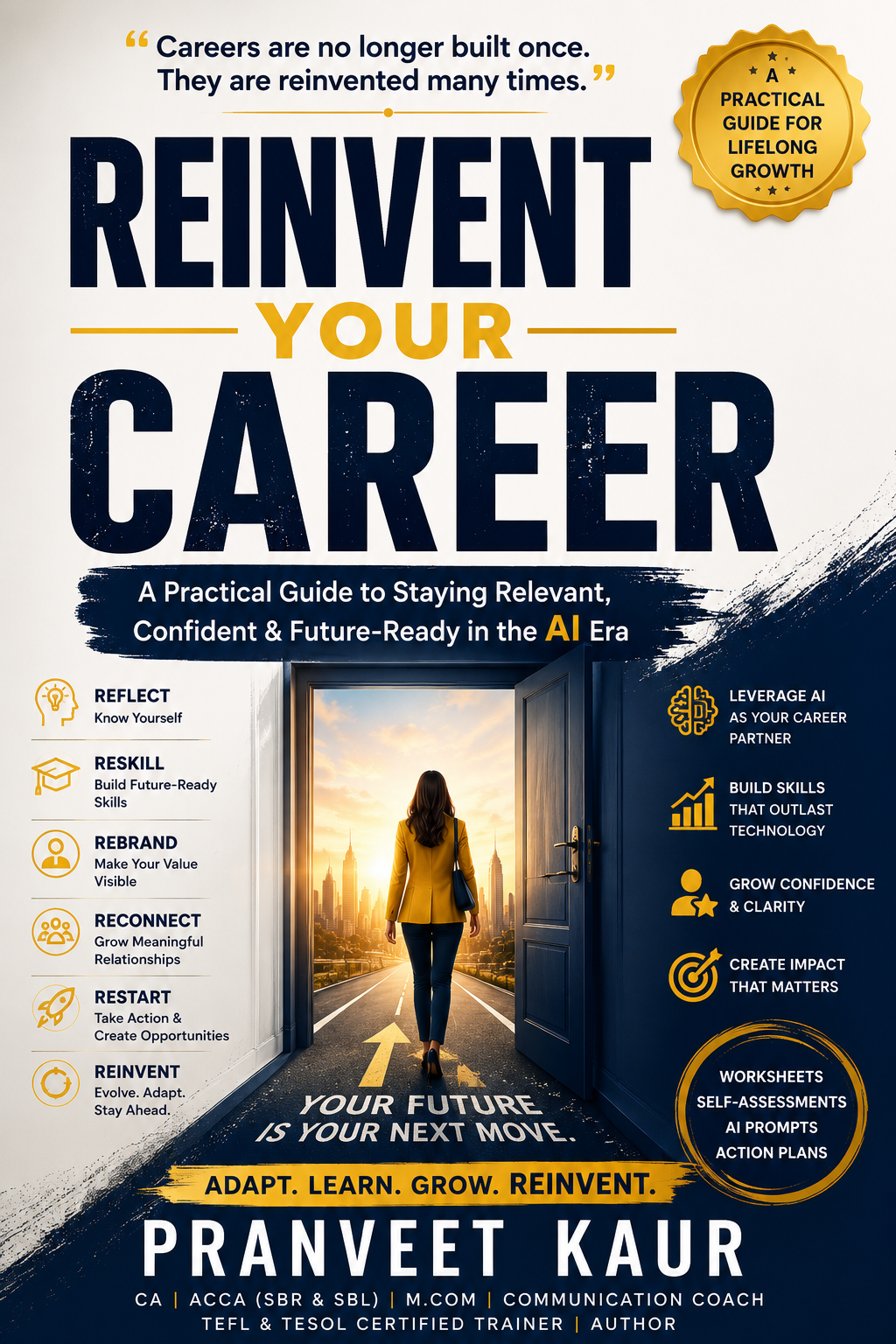
Ready to Reinvent Your Career?
If you’re ready to go beyond simply returning to work and want to rethink your skills, direction, confidence and professional future, explore Reinvent Your Career.
A practical guide to restarting, reskilling and rebuilding your career for the AI era.
Explore Reinvent Your Career →